| |
| Thursday 8 October 2026 |
| The Art of the Cartoon |
| Harry Venning |
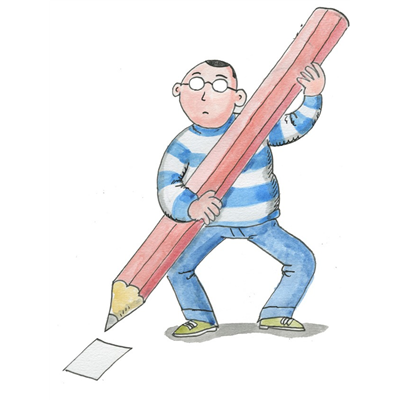 |
Harry Venning has been a professional cartoonist for thirty years, during which time he has provided cartoons for several high profile UK publications (The Guardian, Radio Times) as well as for countless more obscure titles (British Journal Of Wound Care). He was awarded UK Strip Cartoonist Of The Year for his Guardian strip 'Clare In The Community', which he adapted into a Radio 4 sitcom. In this lecture Harry will be tracing the history of his profession with examples from early practitioners like Cruickshank and Hogarth, to more contemporary artists such as Giles and Schulz, bringing events right up to date with cartoons produced fresh on the page that day! Yes, Harry will be drawing live Prepare to hear some tricks of his trade, learn where to put eyebrows for maximum effect and discover exactly what the eskimo brothers said in The Funniest Joke Ever (possibly) HARRY VENNING Harry Venning is a cartoonist, comedy writer and performer based in Brighton. Harry’s cartoons have appeared in publications as diverse as Mathematics Today, Radio Times, Music Teacher and The Stage. For twenty five years he provided The Guardian with the weekly strip cartoon 'Clare In The Community', about an unaware and empathy free social worker. In 2004 he developed Clare In The Community into a successful BBC Radio 4 sitcom starring Sally Philipps which ran for twelve series. When not at a desk, Harry tours his cartoon workshop around schools, theatres, arts centres, cruise ships and festivals. He is an Honorary Fellow of the English/Creative Writing departments of Aberystwyth University, resident cartoonist with the Blue Hat team building organisation, UK Social Workers Union honorary ambassador, winner of a Sony Radio Award for Comedy and a former UK Strip Cartoonist Of The Year. He cannot draw hands or horses. |
|
| Thursday 12 November 2026 |
| Bath - the story of a city |
| Jonathan Foyle |
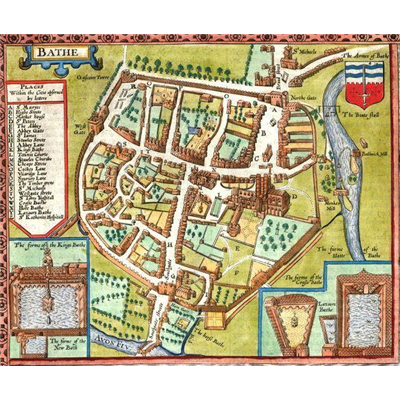 |
Bath is famous as England's most beautiful Georgian city, a vision of sweeping crescents and neat squares in golden stone, framed by wooded hills. But this was a medieval and ancient city, too. So what were its origins- how did it burst out of the old walls to develop into its elegant final form; which ideas fell by the wayside, and what do the major individual buildings have to tell us when we look at them closely?
JONATHAN FOYLE Dr Jonathan Foyle is a career communicator, best known for presenting TV series such as BBC2's Broadcast Award-winning 15-part 'Climbing Great Buildings', as well as contributing to Channel 4's 'Time Team' and Channel 5's 'Secrets of the Royal Palaces'. His former roles have encompassed Curator at Hampton Court and Chief Executive of World Monuments Fund Britain, writer for the FT Weekend, and he is now a lecturer at the University of Bath. Jonathan has authored seven volumes on great cathedrals and castles and has spoken across the world about discoveries in British arts. His talks offer fresh and original analyses of his own personal fascinations in architecture and the arts and crafts, especially their all-important symbolism, through which we can better understand what their makers were trying to communicate. |
|
| Thursday 14 January 2027 |
| Bruegel - The Seasons of the World |
| Gavin Plumley |
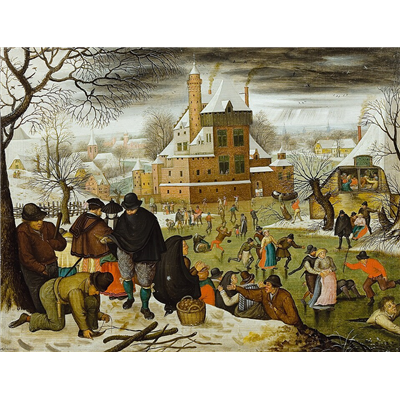 |
In 1565, Pieter Bruegel the Elder was commissioned to create a series of paintings for a dining room in Antwerp. The images, charting the course of a year, changed the way we view the world through art. Landscape had previously been a decorative backdrop to dramas both sacred and profane. But in Bruegel's hands the landscape and our interaction with it became the focus. Looking at paintings such as The Return of the Herd, Hunters in the Snow and The Gloomy Day, this lecture explores how Bruegel pioneered a whole new way of thinking about the environment and our individual places within a shifting cosmos. |
|
| Thursday 11 February 2027 |
| 'The Brilliance of Bernini's Sculpture |
| Antonia Gatward-Civizli |
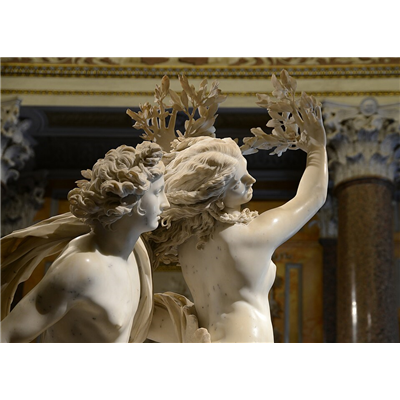 |
Dramatic struggles, speaking portraits, ecstatic nuns and dynamic fountains are among the works discussed in this lecture. We will survey Bernini’s career as a sculptor from his beginnings as a child prodigy to his final years managing a prolific workshop. We look at the important role played by his patrons and champions, his techniques and his subject matter. |
|
| Thursday 11 March 2027 |
| 'To beautify the hallowed resting places of our dead': Herbert Baker and the Imperial War Graves Commission |
| Mark Connelly |
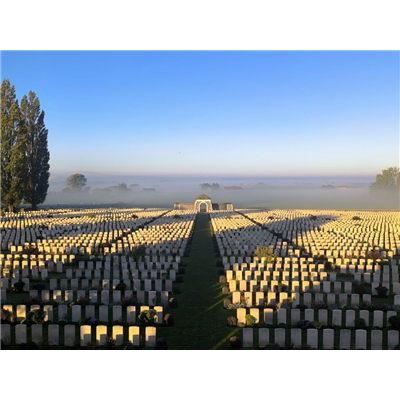 |
Herbert Baker was one of the Principal Architects of the Imperial War Graves Commission and he brought a distinctive vision to the cemeteries and memorials he designed for the Commission. As he admitted in his autobiography, his approach was shaped by sentimental, rather than intellectual, reactions. Rooted in that sentimental approach was his sense of Englishness as shaped by his upbringing in Kent. Thus, for Baker knapped flint was an essential material, and his ideal was to create English country churchyards and imitate the repose and beauty of a cathedral close. |
|
| Thursday 8 April 2027 |
| Picasso and Cubism - art is a lie by which we understand the truth |
| Douglas Skeggs |
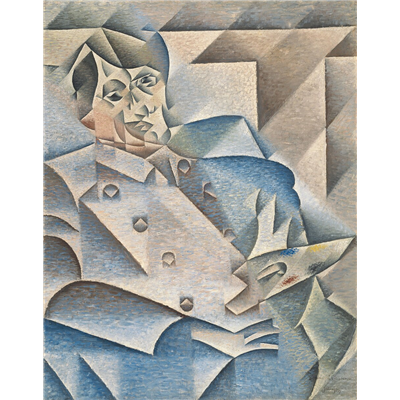 |
Picasso is one of the most famous and controversial figures of the 20th century. Even today his work triggers mixed and often violent reactions from art lovers. This lecture aims to calm those fears. It follows his early career from his childhood in Spain, where his unique talent was first recognized, to the garrets and back streets of Paris where the poetic and wistful images of the Blue Period were transformed into the daring experiments with form and structure that became known as Cubism. |
|
| Thursday 13 May 2027 |
| Whose Shakespeare is it, anyway? |
| Nick Hutchison |
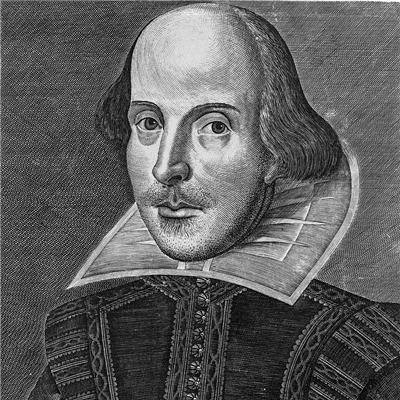 |
When we talk about a Shakespeare play what do we actually mean? How have these plays come down to us across the centuries, and how faithful are modern editions to the originals? This interactive, entertaining and enlightening lecture (developed with Sir Jonathan Bate, the distinguished Shakespearean scholar,) discusses how we approach a Shakespearean text, where it comes from, and how modern editors reedit them, frequently mistakenly. |
|
| Thursday 10 June 2027 |
| The Bayeaux Tapestry - 950 years of propaganda, intrigue and spin |
| Timothy Wilcox |
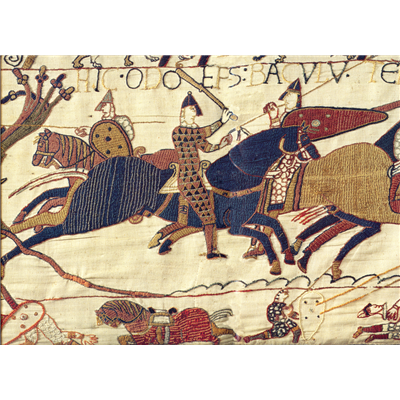 |
The Bayeux Tapestry is instantly recognisable and one of the most outstanding cultural objects to survive from the early Middle Ages. Long admired for its vivid narrative, today it is the unanswered questions that most intrigue modern audiences: was it made in England or France? Was it stitched by men or women? This sparkling lecture looks not only at its creation, but also at its more amazing afterlife. Displayed by Napoleon to bolster French ambitions for a new cross-channel invasion; cherished by Victorian embroiderers as an icon of women’s heroic joint efforts; hunted down by Hitler, who was outwitted by bureaucratic obfuscation. |
|
| Thursday 9 September 2027 |
| Finland's Fount of Culture - Art, music and design on the shores of Lake Tuusula |
| James Vaux |
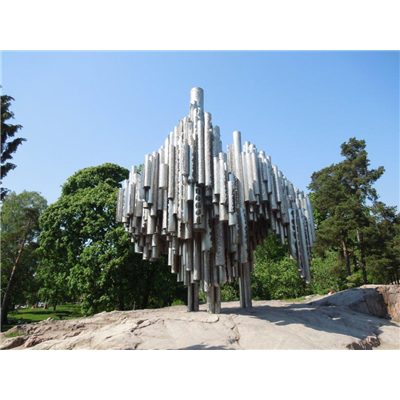 |
Around 1900 in Finland, some of its most famous painters and writers - and the composer Sibelius - gathered on the shores of tiny Lake Tuusula and built their own country homes. It was an artists’ colony that changed Finland’s soul. Not only was this the golden age of Finnish painting, but a pivotal moment in Finnish history, as these intellectuals forged a cultural identity for the country distinct from its Russian oppressor and set Finland on the road to independence. Their beautiful lakeside homes are still standing today as national treasures. |
|
| Thursday 14 October 2027 |
| From Bronzes to Banksy - An armchair tour of public art and street art |
| Ian Swankie |
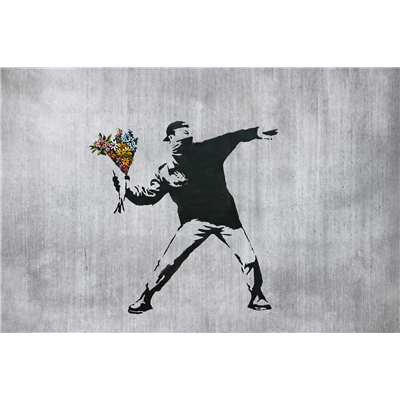 |
London has not only a world-class reputation for art in its many galleries, but also a remarkable range of art in the open air. We will tour around the capital discovering some of the most interesting works from across the centuries. They range from huge and expensive commissions to unofficial graffiti, which is sometimes audacious and often playful, but they all have a place in our society. We will look at why art is there, how it has developed over the years and we’ll discover many hidden gems. |
|
| Thursday 11 November 2027 |
| Persepolis: art, architecture and ideology of the Persian Empire |
| James Renshaw |
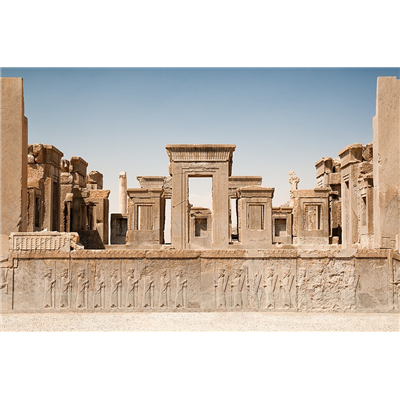 |
The Persian empire exploded into life during the middle of the 6th century BC and was the largest empire in the world for the next two centuries. It stretched from the Mediterranean in the west to the Indus valley in the east, from the Eurasian steppes in the north to Egypt and Arabia in the south. In around 515, its third Great King, Darius I, commissioned the building of a new city, Persepolis, with his palace at its centre. We know a great deal about this palace, and one of its central features, the Apadana Staircase, can be seen in replica in the British Museum. What can this palace and its art tell us about the ideology of this extraordinary and influential empire? |
|